Manuscript Eligibility & Preparation Guide
To maintain the highest standards of scientific integrity and quality, all submissions to GRJNST must comply with the following non-negotiable eligibility criteria. Manuscripts failing to meet any of these standards will be rejected without peer review.
3.1 Originality
- Manuscripts must be entirely original work of the authors and must not have been published or under consideration elsewhere.
- Reproduction of previously published material is strictly prohibited unless proper permission and citation are provided.
- Any overlapping or derivative work must clearly indicate the novel contribution and highlight differences from prior publications.
3.2 Plagiarism
- GRJNST adheres to the Higher Education Commission (HEC) and international standards for plagiarism.
- Maximum allowed similarity index: 20% using Turnitin or equivalent plagiarism detection software.
- Similarity in methodology, references, or standard phrases is acceptable if properly cited; excessive similarity to prior work will result in immediate rejection.
- Authors are encouraged to submit the similarity report along with the manuscript to speed up editorial processing.
3.3 Copyright Compliance
- All material reproduced from other sources (figures, tables, text, images) must include written permission from the original copyright holder.
- Proper attribution must be provided in captions or footnotes.
- Use of Creative Commons licensed content must adhere to license terms.
3.4 Ethical Approval
- Human and animal studies must include approval from a recognized Ethics Committee or Institutional Review Board (IRB).
- A statement confirming ethical compliance must be included in the Methods section.
- For studies involving secondary data, authors must indicate compliance with applicable regulations on confidentiality and privacy.
- Any experiments posing risk to participants or the environment must include mitigation measures.
3.5 Conflict of Interest Declaration
- Authors must disclose any financial, personal, institutional, or professional conflicts that may influence the research.
- Funding sources, sponsorships, and material support must be acknowledged transparently.
- Conflicts must be declared even if they are perceived rather than actual.
3.6 Data Availability
- Authors should indicate where raw data, supplementary datasets, or source code supporting the results can be accessed.
- Publicly available repositories (Zenodo, Figshare, Dryad, institutional repositories) are preferred.
- Data sharing promotes transparency, reproducibility, and scientific credibility.
GRJNST requires authors to strictly adhere to the preparation and formatting standards below to ensure clarity, reproducibility, and high editorial quality. Manuscripts not complying with these guidelines will be returned for revision.
4.1 Language, Style, and Presentation
- Manuscripts must be written in clear, formal, and concise English, suitable for international readership.
- Use inclusive language and avoid bias, stereotypes, or gendered terminology. Follow CSIC recommendations on non-sexist language.
- Avoid ambiguous expressions; scientific clarity is paramount.
- Abbreviations must be defined at first use. Excessive abbreviations that reduce readability are discouraged.
- Minimize the use of passive voice; active voice is preferred for clarity in describing methods and results.
- Use standard scientific units and symbols consistently throughout the manuscript.
4.2 Manuscript Structure
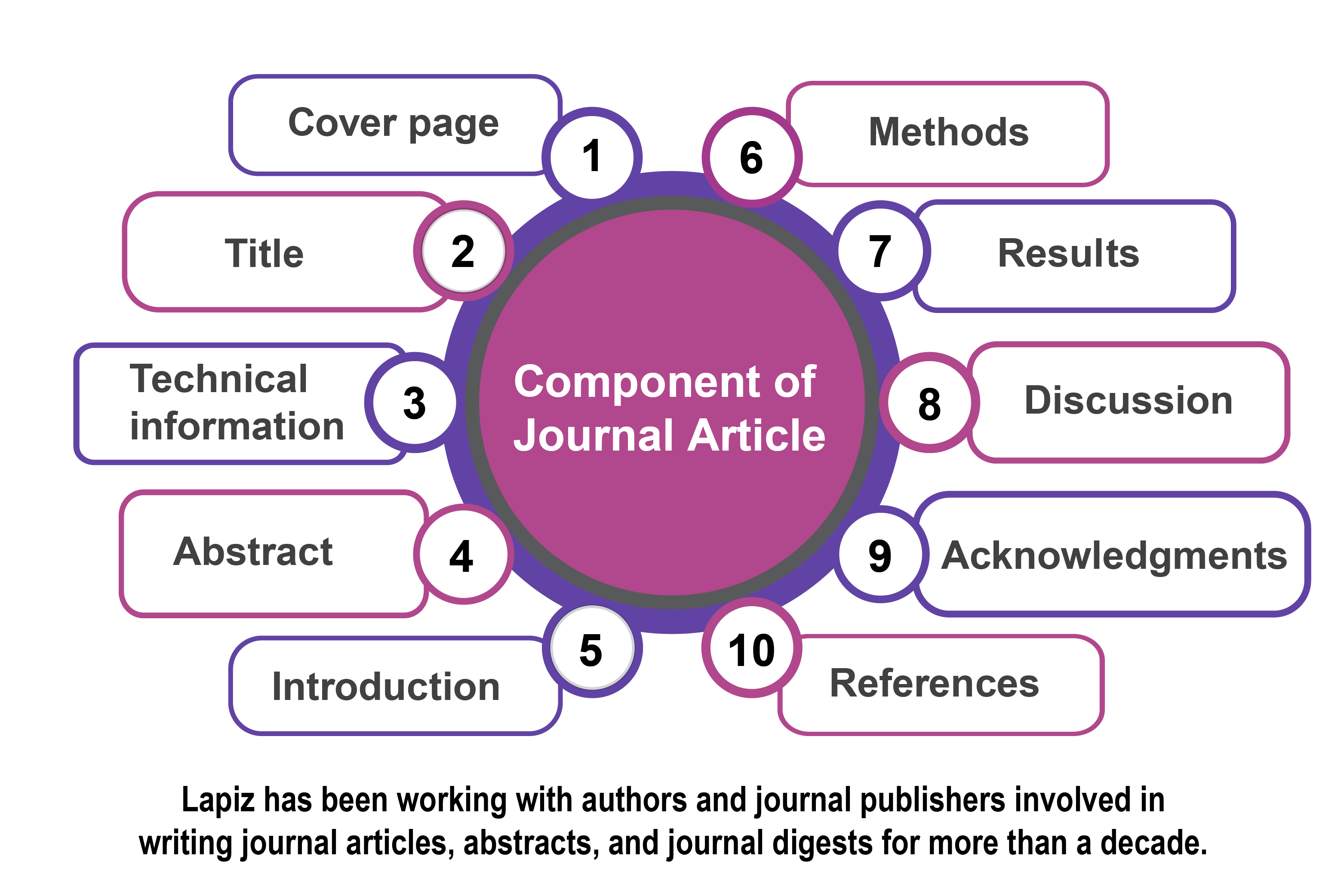
Manuscripts must be organized in the following sequence:
4.2.1 Title Page
- Provide a concise and descriptive title reflecting the study’s scope and findings.
- Include full names of all authors, with ORCID iDs, institutional affiliations, department, city, and country.
- Clearly indicate the corresponding author, providing email and ORCID.
- Optional: Provide short title for headers (≤60 characters).
4.2.2 Abstract
- Maximum 300 words, summarizing objectives, methodology, results, and conclusions.
- Abstract must be self-contained, with no citations or undefined abbreviations.
- Include 5 keywords relevant for indexing in databases and search engines.
4.2.3 Introduction
- Present the research problem, objectives, and rationale.
- Review relevant literature critically and identify knowledge gaps.
- Clearly articulate the study’s hypothesis or research questions.
- Avoid excessive historical context; focus on recent developments and current relevance.
4.2.4 Materials and Methods
- Provide comprehensive methodological details enabling reproducibility. Include:
- Study design and experimental setup.
- Sampling techniques, sample size, inclusion/exclusion criteria.
- Data collection methods and instrumentation.
- Analytical, statistical, and computational procedures.
- Ethical approval statements, when applicable, must be included.
- If software or algorithms are used, provide version numbers and configuration details.
4.2.5 Results
- Present findings in logical sequence with appropriate subheadings.
- Use tables, graphs, and figures to summarize key results.
- Include statistical measures (mean, SD, p-values, confidence intervals) where appropriate.
- Avoid redundancy: data in figures should not repeat the same information in tables unless necessary.
4.2.6 Discussion
- Interpret the results in context of existing literature.
- Address whether hypotheses were supported.
- Discuss implications, limitations, and potential future directions.
- Avoid repeating results; focus on analysis, interpretation, and significance.
4.2.7 Conclusion
- Provide a concise summary of findings and their contribution to science.
- Avoid introducing new data or concepts not covered in the results and discussion.
4.2.8 Acknowledgments
- Mention funding agencies, institutional support, and contributors who do not meet authorship criteria.
- Include any technical assistance, lab support, or editorial contributions.
4.2.9 References
- Follow APA 7th edition style.
- Include DOIs for all digital references.
- Cite all references mentioned in text and vice versa.
- Examples:
- Journal article: Smith, John. (2020). Title of article. Journal Name, 12(3), 45–60. https://doi.org/xxxx
- Book: Brown, Alice. (2018). Title of Book. New York: Publisher.
- Conference paper: Lee, K., & Patel, R. (2019). Title. In J. Doe (Ed.), Proceedings of XYZ (pp. 23–30). Publisher.
4.3 Figures and Tables
- Number consecutively in the order of appearance (Figure 1, Table 1, etc.).
- Provide descriptive captions above tables and below figures.
- Indicate data source and attribution if not original.
- Figures/images must be high resolution (≥300 dpi).
- Embed all tables and figures in the manuscript at approximate positions.
- Supplementary figures or large datasets may be uploaded separately.
4.4 Equations and Mathematical Expressions
- Include equations directly in the Word or LibreOffice file, not as images.
- Define all symbols, constants, and units.
- Use standard notation and ensure consistency throughout the manuscript.
- Number all equations sequentially if referenced in the text (Equation 1, Equation 2, …).
4.5 Supplementary Materials
- Include additional datasets, media, or supporting information to complement the main manuscript.
- Acceptable formats: PDF, Excel, Word, JPEG, TIFF.
- Multiple files should be combined in a single ZIP or RAR archive.
- Supplementary materials will be published online alongside the article and must include captions, legends, and metadata.
4.6 Ethical, Legal, and Compliance Statements
- Manuscripts involving human subjects, animals, or genetically modified organisms must include ethical statements and approval codes.
- Authors must declare conflicts of interest, funding sources, and permissions for reproduction.
- GRJNST adheres to COPE guidelines for ethical publishing.
4.7 Manuscript File Submission Requirements
- Submit two versions of the manuscript:
- Editable version (Word/LibreOffice) including all authorship info, affiliations, and graphics.
- Anonymized PDF for peer review, with author identifiers removed.
- Additional required files:
- Copyright transfer statement
- Supplementary materials
- Permissions for reproduced content