Digital Pure Tone Audiometer: A Smart and Self-Administered Hearing Test System
DOI:
https://doi.org/10.53762/grjnst.04.03.16Keywords:
Audiometric testing, Digital pure tone audiometer, Patient response, Raspberry-pi, Real-time representation, User interfaceAbstract
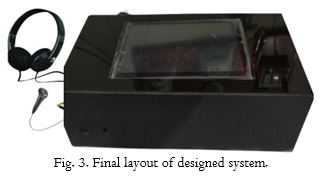
Hearing loss affects over 430 million people globally, with the World Health Organization projecting this figure to rise to 700 million by 2050. Despite its prevalence, access to affordable and accurate diagnostic tools remains limited, particularly in low-resource settings. Traditional audiometry systems rely on complex hardware and proprietary software, limiting their scalability and adaptability. This device reimagines such systems by utilizing open-source technologies to create a user-friendly device. The core problem lies in bridging the gap between affordability and diagnostic accuracy while ensuring compliance with international audiometric standards. The solution integrates a Raspberry Pi with headphones and a touchscreen interface, capable of performing pure-tone audiometry across frequencies (125 Hz–8 kHz) at intensities up to 120 decibel Hearing Level. Key features include automated threshold detection, real-time audiogram visualization, and dual operational modes (manual/auto) to accommodate diverse clinical workflows. The auto mode uses adaptive algorithms to reduce testing time, while the manual mode allows clinicians fine control for unusual cases. The procedures encompassed iterative prototyping, software development for tone generation and response logging, and rigorous clinical validation. Calibration was performed using a reference sound level meter, while usability metrics (e.g., touch responsiveness, test duration) were quantified through timed trials. Results demonstrated a mean threshold deviation of ±4 decibel Hearing Level compared to the commercial device. Testing involved 49 participants, including clinicians and patients, to evaluate accuracy, usability, and efficiency. This device underscores the viability of open-source, low-cost solutions in bridging healthcare disparities, offering a scalable model for hearing loss diagnosis.
Downloads
Published
Issue
Section
License
Copyright (c) 2026 Pareesa Shoro, Aliza, Hamna Khan Alias Palwasha, Saeed Ahmed Maitlo, Sarmad Shams (Author)

This work is licensed under a Creative Commons Attribution-NonCommercial-NoDerivatives 4.0 International License.