Impact of Climate Change (CC) on Guava (Psidium guajava L.) Phenology, Yield and Commercial Fruit Quality; Prospective Policy
DOI:
https://doi.org/10.53762/grjnst.04.02.09Abstract
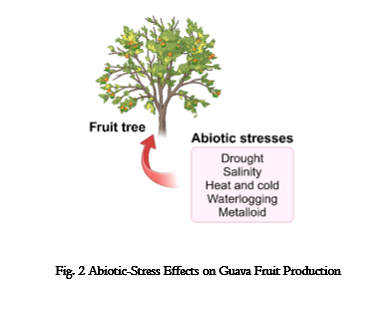
It has been observed that the climate is changing from last few couple of years. One of the many negative consequences of climate change is the alteration of the natural vegetation and environment. Phenology, or the shifting timing of plant growth activity, is one of the most well-documented consequences of climate change. Climate change is causing changes in the length of the vegetative and reproductive phases. By shortening the vegetative period, warmer temperatures often reduced the number of days needed for flowering in the majority of fruit crops. Guava (Psidium guajava L.) commercially 3rd fruit crop of significant economic importance in Pakistan and high nutritional potential, yet its production faces severe challenges during last two decades due to climate change overall globally and more frequently in South East Asian (SEA) countries. This comprehensive effort highlight and examines the climate change (CC) impact on Guava phen-phases, crop improvement and overall fruit quality parameters, highlighting disruptions caused by rising temperatures, altered precipitation patterns, and increased frequency of extreme weather events such as long summer season span, droughts and heavy rainfall during monsoon weather. These changes affect critical physiological processes, including flowering, fruit setting, fruit growth and maturation leading to irregular bearing, reduced yields, and compromised fruit quality such as, size, color and sweetness. Climate-induced biotic stressors exacerbate pest and disease pressures, further threatening commercial production. adaptation and mitigation precision horticulture strategies, including improved irrigation systems, canopy management techniques during high density plantation and efficient use of micronutrients like zinc and boron, are practical solutions to enhance resilience. the paper also explores future perspectives, emphasizing precision horticulture and supportive policy frameworks to ensure sustainable guava production. by integrating advanced technologies, resilient cultivars and innovative pomological practices, this study underscores potential to mitigate impact of climate change (CC) for secure guava production.
Downloads
Published
Issue
Section
License
Copyright (c) 2026 Bilal Ahmed Awan , Muhammad Usman, Bilquees Fatima , Hasham Feroz Ghuman, Bushra Rashid, Faisal Saeed Awan (Author)

This work is licensed under a Creative Commons Attribution-NonCommercial-NoDerivatives 4.0 International License.