Digital Twin-Based Predictive Monitoring and Intelligent Fault Diagnostics for High-Reliability Electrical Machines and Power Infrastructure
DOI:
https://doi.org/10.53762/grjnst.04.01.25Keywords:
digital twin, electrical machines, fault diagnostics, predictive maintenance, power infrastructure, reliability engineeringAbstract
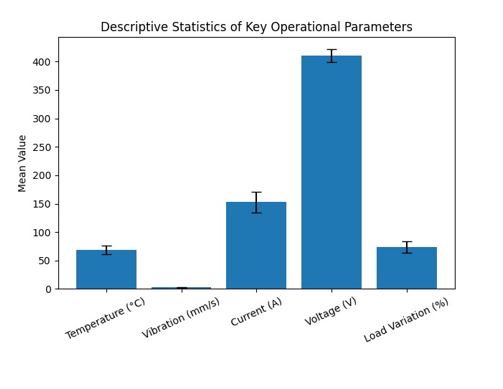
The increasing complexity of modern electrical machines and power infrastructure has created a growing demand for intelligent monitoring systems capable of ensuring reliability, efficiency, and predictive maintenance. This study investigated the application of digital twin–based predictive monitoring and intelligent fault diagnostics for high-reliability electrical machines and power systems. A digital twin framework was developed by integrating real-time sensor data, machine learning algorithms, and simulation-based models to create a dynamic virtual representation of physical electrical assets. The proposed system continuously monitored key operational parameters including temperature, vibration, current, voltage, and load conditions to detect anomalies and predict potential failures. Experimental evaluation was conducted using operational data collected from electrical machines operating in industrial environments. The results demonstrated that the digital twin predictive monitoring model achieved 92.6% diagnostic accuracy, 90.4% precision, 88.9% recall, and a 91.2% fault detection rate. Furthermore, the implementation of the digital twin monitoring system significantly improved operational performance by reducing equipment downtime from 14.6 hours to 8.2 hours per month, representing a 43.8% improvement. Maintenance response time decreased from 6.4 hours to 3.1 hours, while operational efficiency increased from 82.5% to 91.4%. In addition, overall system reliability improved from 85.2% to 93.6% following the implementation of the predictive monitoring framework. These findings demonstrated that digital twin technology provided an effective solution for intelligent fault diagnostics and predictive maintenance in modern power infrastructure. The study contributed to the development of smart energy systems by enabling proactive maintenance strategies and improving the resilience and reliability of electrical machines.
Downloads
Downloads
Published
Issue
Section
License
Copyright (c) 2026 Muhammad Sharjeel Ali, Muhammad Waqar , Hassaan Bin Umar, Mahtab Ali, M Haris Aman, Adeel Ansari (Author)

This work is licensed under a Creative Commons Attribution-NonCommercial-NoDerivatives 4.0 International License.